When you think of the Algarve, it’s only natural that golden beaches and jagged cliffs spring to mind. But there is another, more understated treasure that reveals itself to anyone who looks at the walls: the azulejos in the Algarve, its painted ceramic tiles.
Found on churches, palaces, façades, fountains and even garden benches, these panels tell centuries of history in shades of blue and white (and more). They are an invitation to slow down and take in the details that, in the rush of the holidays, so often escape our notice.
Whether you live in the region or own a home there, this article is also a chance to take a fresh look at things you might walk past every day without noticing. Let’s discover together where this treasure is hidden and how to enjoy it to the full.
An art form with deep roots
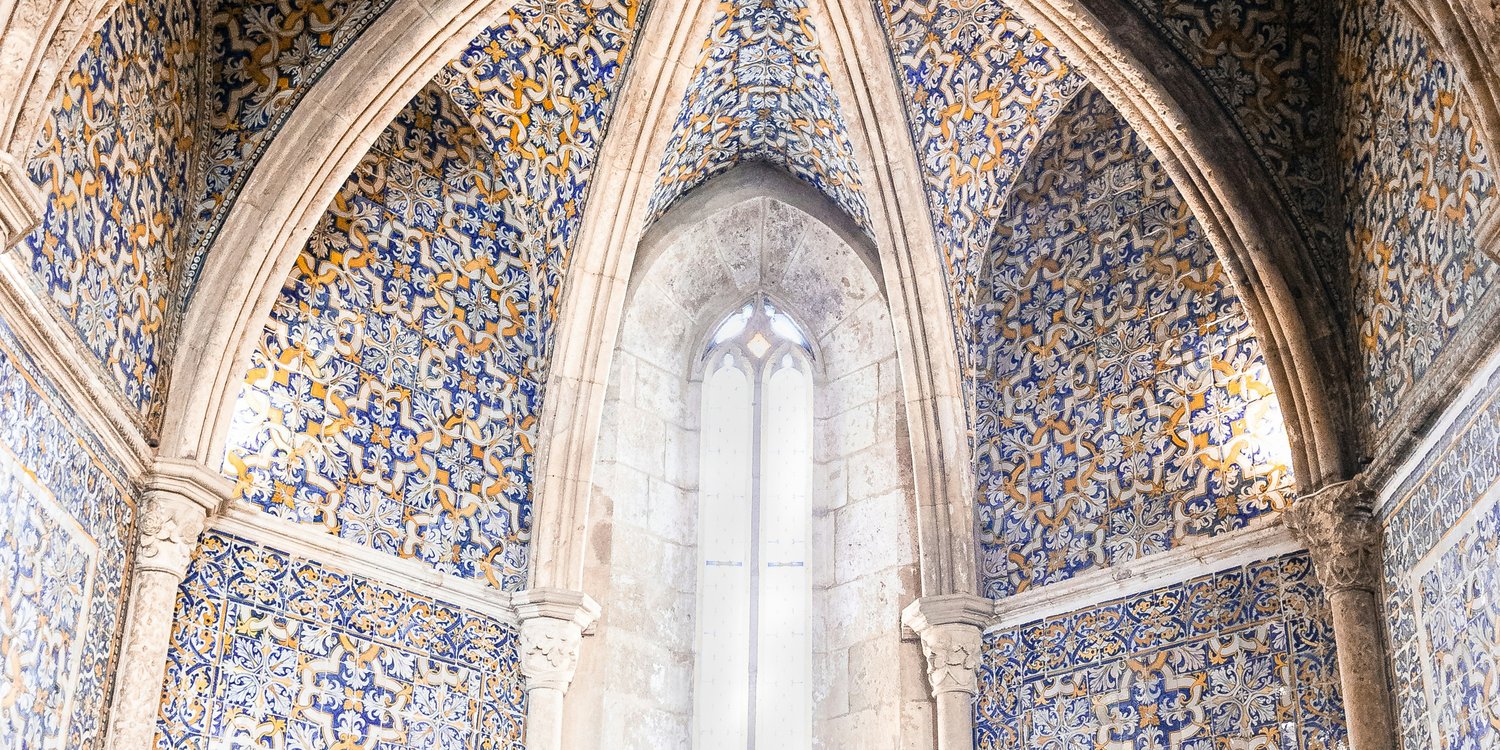
The azulejo came to the Iberian Peninsula through Islamic culture and took on a life of its own in Portugal from the 16th century onwards. The word itself comes from the Arabic az-zulayj, meaning ‘polished stone’, a clue to its origins.
In the Algarve, a region with a strong Muslim presence for centuries, the azulejo found fertile ground. Even today, the region’s azulejo art reflects this heritage, from the repeated geometric patterns to the warm colours that blend so well with the southern light.
Styles you’ll find
As you explore the region, you’ll come across different types of azulejo, each from its own period:
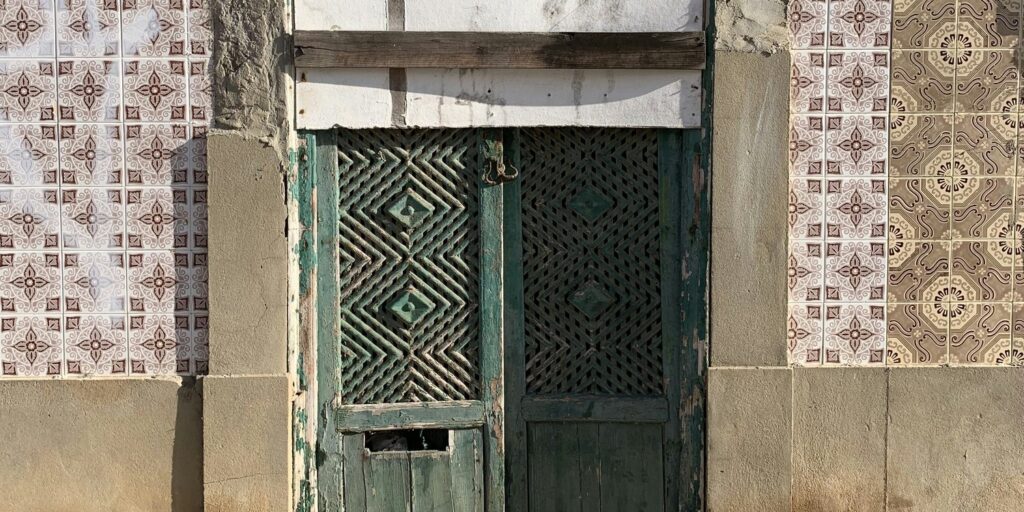
- Patterned azulejos: the same design is repeated to cover large surfaces, and they are widely used on façades.
- Figurative panel: depicts a story, a religious scene or a historical episode, like a ceramic painting.
- Blue and white azulejos: the most iconic style, which gained popularity in the 18th century and remains synonymous with Portuguese tile-making.
Knowing how to distinguish between these styles makes any walk more rewarding, because you start to ‘read’ the walls rather than just walking past them.
Where to find the most beautiful azulejos
Igreja de São Lourenço, in Almancil
For many, it is the jewel in the crown. The interior of this church (the Church of St Lawrence), near Loulé, is almost entirely covered in 18th-century blue and white azulejos, which tell the life of Saint Lawrence. From floor to ceiling, it is a truly immersive experience. A breathtaking visit, especially in the right light.
Igreja do Carmo, in Faro
As well as the famous Capela dos Ossos (Chapel of Bones), the Igreja do Carmo (Carmo Church) houses some truly beautiful azulejo panels. Faro, in fact, is full of azulejo details: it’s well worth getting lost in the old town, inside the city walls.
Façades in Tavira and Olhão
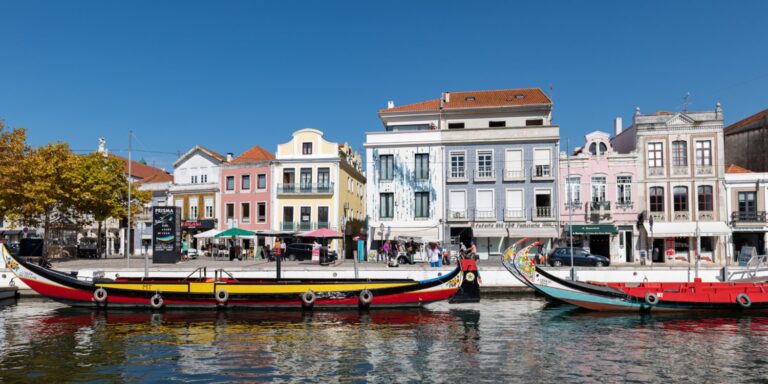
Tavira is known for its façades clad in patterned azulejos, many dating from the 19th century, when it was fashionable to protect and embellish houses in this way. Strolling through its streets is like leafing through an open-air catalogue. In Olhão, the North African-influenced architecture, with its terraces and white buildings, adds a unique touch to the townscape.
 Gastronomy5 Chefs’ Restaurants in the AlgarveRead more
How to appreciate and protect this heritage
To make the most of these outings, here are a few simple suggestions:
- Take your time: the beauty of the tiles lies in the details, the light and the repetition of the patterns. Don’t rush.
- Take photographs with respect: in places of worship, check whether photography is allowed and avoid using a flash, which can damage the tiles.
- Don’t take ‘souvenirs’: removing azulejos from buildings is a crime and impoverishes everyone’s heritage. Unfortunately, many historic panels have already been lost this way.
- Ask for local information: tourist information centres and local guides know of hidden gems that aren’t on the usual itineraries.
If you’re interested in Portugal’s cultural heritage, you’ll also enjoy our guide to what to see in Aveiro, another city where azulejos shine on every corner.
The Algarve has much more to offer than sun and sea. It has stories told in ceramic, just waiting for someone to notice them. Next time you’re strolling through an Algarve village, look up at the façades: the treasure might be right there, on a wall you had never noticed.
This is a fragile heritage, which survives thanks to the care of those who value it. By learning to appreciate it, you are also helping to preserve it. To explore the history of this art form in greater depth, the Museu Nacional do Azulejo (National Tile Museum) in Lisbon is an excellent place to start.
 Tiago Machado