Moving to Portugal with children means getting to grips with a new school system, and the good news is that the education system in Portugal is more straightforward than it first looks. Public education is free, the quality is solid, and the enrolment process is largely handled online. Whether your child is starting nursery or preparing for university, this guide walks you through how schooling works, when the school year begins, when and how to enrol, which documents you will need, and what it all costs.
A quick note before we start: this is general information to help you plan. Exact dates and requirements can vary between schools, so always confirm with the specific establishment your child will attend.
What is education in Portugal like?
Education in Portugal is organised into clear stages, from early childhood through to university. Schooling is compulsory from age 6 to 18, which in practice means from the first year of basic education until the end of secondary school. Public schools are free, and there is also a network of private and international schools, particularly in and around Lisbon, Porto, and the Algarve, where many international families settle.
Nursery and pre-school
Early childhood education comes in two parts. Crèche (creche) welcomes children up to age 3 and is optional, while pre-school (educação pré-escolar) covers ages 3 to 6 and, although not compulsory, is widely attended and free in the public network. A government scheme has been extending free crèche places to many families, so it is well worth checking what is available in your area, as places can be in high demand.
Portuguese basic education
Basic education (ensino básico) is compulsory and spans nine years, split into three cycles: the first cycle (years 1 to 4), the second cycle (years 5 and 6), and the third cycle (years 7 to 9). This is the backbone of the system, and it is free in public schools. Children usually start the first year in the September of the year they turn 6.
Secondary education in Portugal
Secondary education (ensino secundário) covers years 10 to 12 and is also compulsory. Here your child chooses a path: scientific-humanistic courses, aimed at those heading to university, or professional and vocational courses, geared towards a trade or direct entry into the workforce. As with basic education, it is free in the public network.
Higher education in Portugal
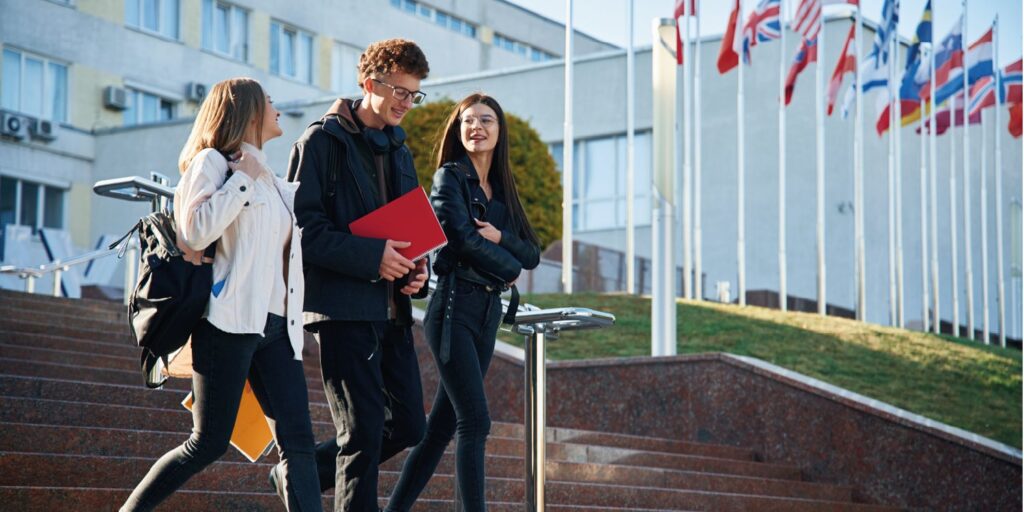
Higher education (ensino superior) is delivered by universities, which lean towards academic and research-based study, and polytechnics, which focus on practical, career-oriented training. Qualifications run from the licenciatura (bachelor’s degree, usually three years) to the mestrado (master’s) and doutoramento (doctorate). There are both public and private institutions, and entry to public higher education is through a competitive national admissions process based largely on secondary school grades and national exams.
When should you enrol your child in school in Portugal?
Enrolment (matrícula) is done, in most cases, online through the Portal das Matrículas, the Ministry of Education’s platform. For most children already in the system, renewal is automatic, and you only need to act when your child is starting school for the first time, changing school, moving up to a new cycle, or making subject choices.
Enrolment windows fall across spring and early summer, organised by school year. For 2026/2027, for example, the periods were 22 April to 1 June for pre-school and the first year of basic education, 16 to 29 June for years 6, 7, 8, 9, and 11, 1 to 13 July for years 2, 3, 4, and 5, and 15 to 22 July for years 10 and 12. The key takeaway is to plan ahead, as enrolment for the coming year happens several months before classes begin.
There is one point that matters enormously for relocating families: children arriving from foreign schools can enrol in basic and secondary education outside these official windows. If you are moving to Portugal mid-cycle, you are not locked out, so contact the school directly to arrange a place.
Documents you need to enrol
When enrolling your child (process mostly digital via Citizen Card, Chave Móvel Digital, or portal credentials), bring:
- Identification and tax numbers (NIF) for student and guardian
- Digital photograph of student
- Proof of address
- Social security number (NISS), if applying for support
- Vaccination record and any extra school-specific documents
Also interesting: The 5 safest cities to live in Portugal
The costs of education in Portugal
For families relocating to Portugal, state education is free from nursery through secondary school, with compulsory textbooks provided free of charge. Parents only pay for daily extras like school meals, transport, stationery, and clubs.
Private and international school fees vary substantially based on location and curriculum, ranging from a few thousand pounds to upwards of €10,000 annually at top international schools.
State higher education offers excellent value. For UK/EU/local undergraduates, annual tuition is capped by law at €697 per year. Non-EU international students, as well as postgraduate students (Master’s and PhDs), pay higher fees set independently by each university. State scholarships and financial support are available for qualifying students.
Portugal offers families a welcoming and affordable education system, with free public schooling, free textbooks in compulsory education, and some of the lowest university tuition in Europe. The essentials to keep in mind are simple: the year begins in September, enrolment happens months earlier, mostly online, and children arriving from abroad can join outside the standard windows.
Get your documents in order, confirm the details with your chosen school, and you will find that settling your children into Portuguese education is one of the smoother parts of making the move. With the right preparation, you can focus on what really matters: helping your family feel at home in your new country.
 Raquel Correia